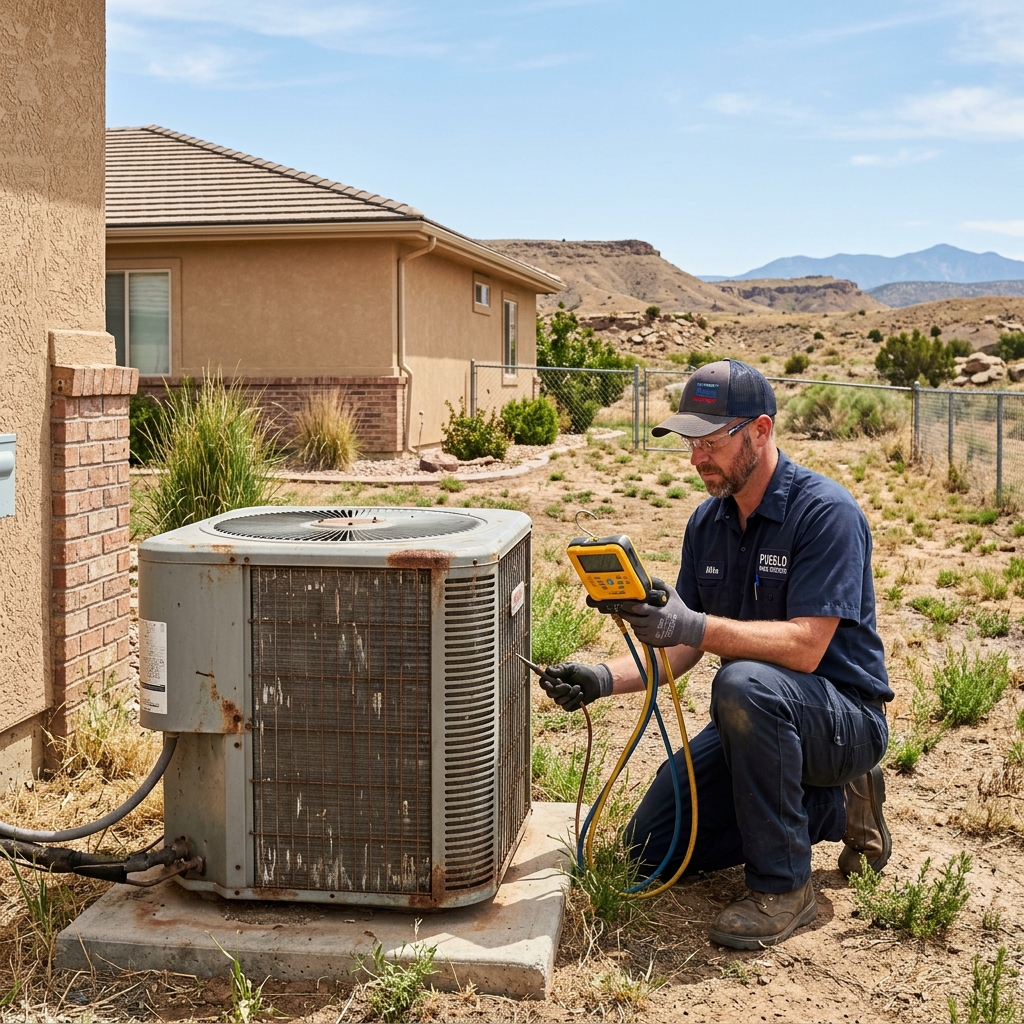
Pueblo homes face indoor air quality challenges that most other cities don’t. Our semi-arid climate produces persistent fine dust, wildfire smoke drifts in from western Colorado every summer, and the low humidity that makes our weather pleasant also dries out respiratory passages and creates static electricity problems. Here’s what’s actually happening inside your home and which solutions are worth the investment.
Dust: Pueblo’s Constant Companion
If you’ve lived in Pueblo for any length of time, you know the dust. Fine particulate from the surrounding mesa terrain, construction activity, and agricultural land south of town infiltrates homes through every gap in the building envelope.
Standard fiberglass furnace filters (MERV 1–4) capture less than 20% of particles in the 1–3 micron range—the size that penetrates deep into your lungs. Upgrading to a MERV 11–13 pleated filter traps 85–95% of these particles without significantly restricting airflow in most residential systems.
Homes in Pueblo West, Avondale, and Colorado City experience higher dust loads due to proximity to unpaved roads and open terrain. These homes benefit most from whole-house air purification systems rather than relying solely on filters.
Wildfire Smoke Infiltration
Every summer, wildfire smoke from fires in western Colorado, New Mexico, and Arizona settles into the Arkansas River Valley. Pueblo’s geography acts like a bowl, trapping smoke-laden air at our elevation. During bad smoke events, outdoor PM2.5 levels can exceed 150 μg/m³—well into the “unhealthy” category.
Your HVAC system recirculates indoor air through the filter, which helps—but only if the filter is rated for fine particles. During smoke events, run the fan continuously (set to ON rather than AUTO) to maximize air filtration even when the system isn’t actively heating or cooling.
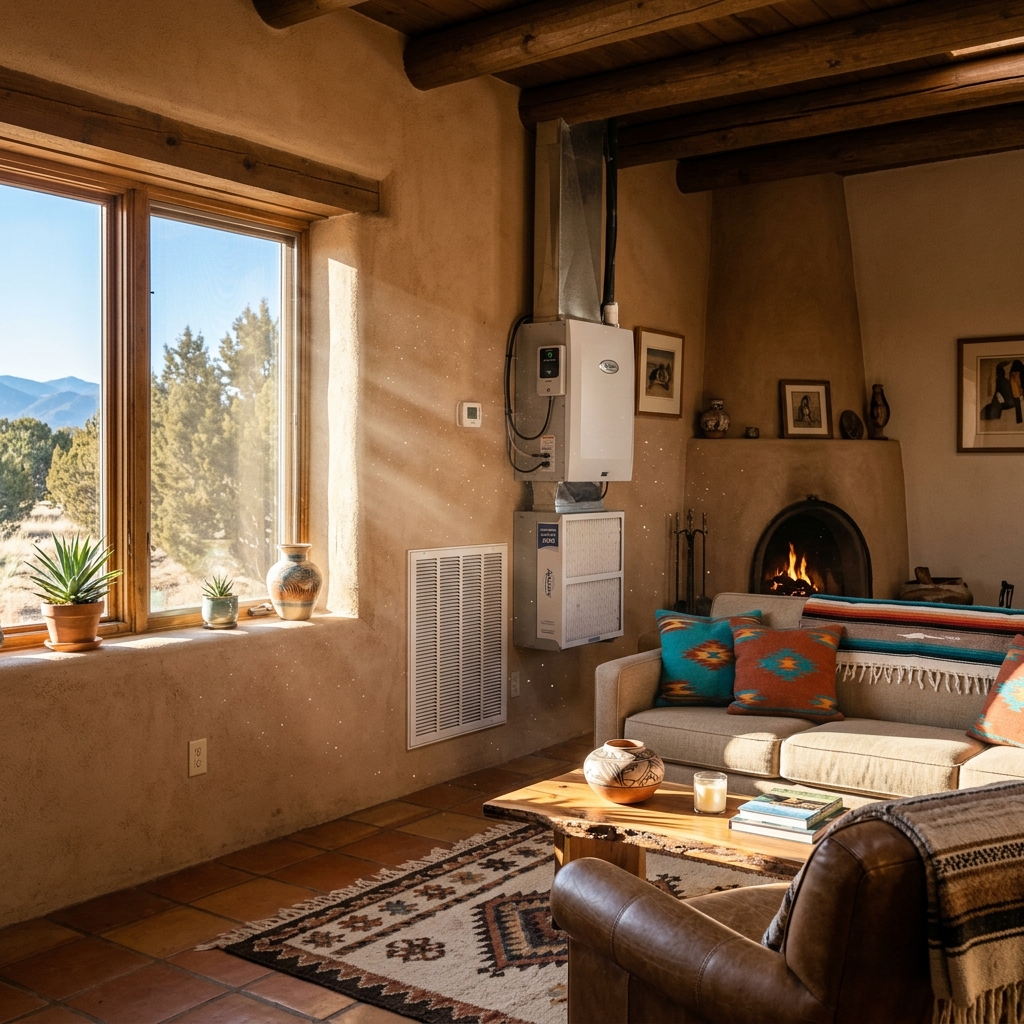
For serious smoke protection, a whole-house HEPA bypass filtration system or an electronic air cleaner integrated with your HVAC system provides hospital-grade air cleaning. These systems are especially worthwhile for households with asthma, allergies, or elderly family members.
Low Humidity and Dry Air Problems
Pueblo’s average relative humidity hovers around 30–40% outdoors and drops even lower inside heated homes during winter. Below 30% indoor humidity, you’ll notice:
- Dry, cracked skin and irritated nasal passages
- Static electricity that damages electronics
- Hardwood floors and wooden furniture splitting and cracking
- Increased susceptibility to cold and flu viruses, which thrive in dry air
A whole-house humidifier installed on your furnace maintains comfortable humidity levels (35–45%) automatically. Bypass humidifiers work well for most Pueblo homes and cost far less to operate than running multiple portable units.
Carbon Monoxide Risks
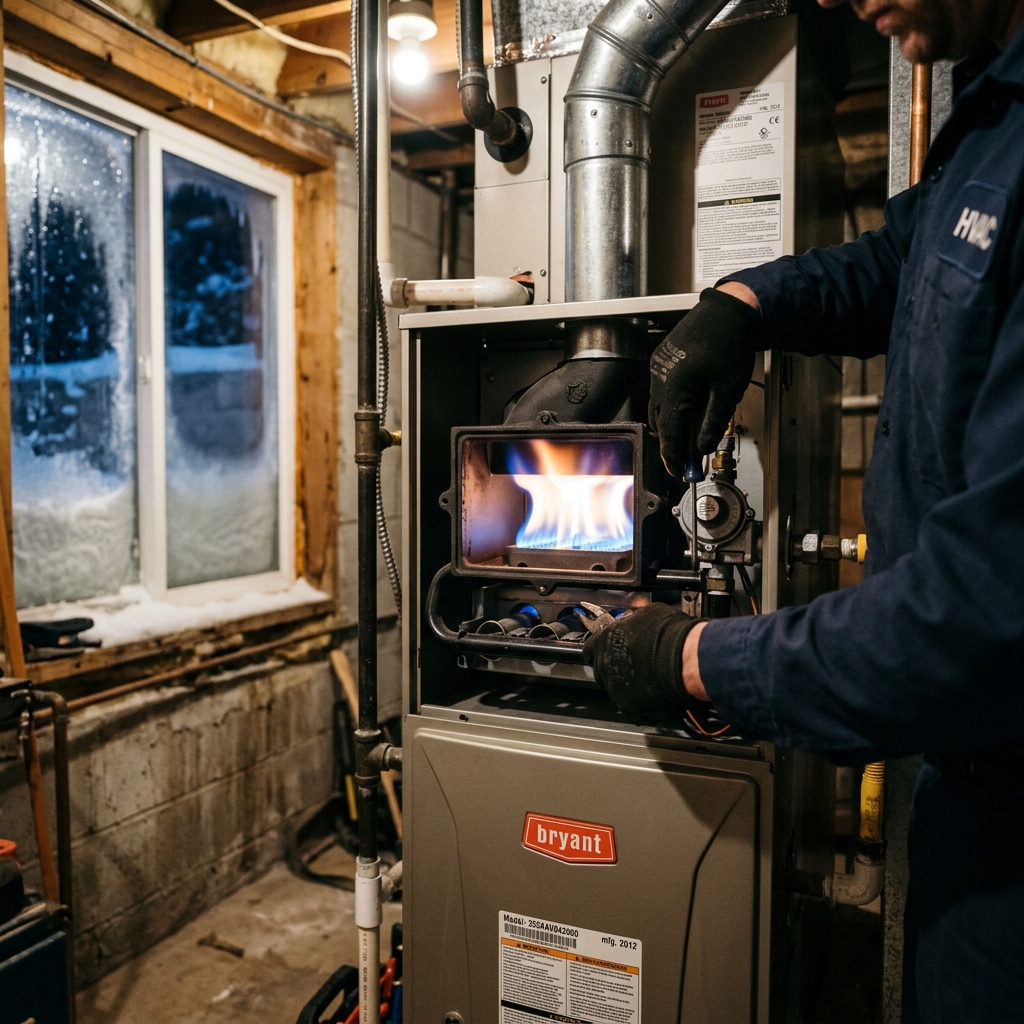
Gas furnaces, water heaters, and gas stoves all produce carbon monoxide. In a well-maintained system with proper venting, CO exits your home safely. But cracked heat exchangers, blocked flue pipes, or backdrafting caused by exhaust fans create deadly CO buildup risks.
Every Pueblo home with gas appliances needs CO detectors on each level, tested annually. Schedule a combustion safety test as part of your fall furnace maintenance to verify all gas appliances vent properly.
Aging Ductwork Problems
Ducts in older Pueblo homes—especially those built before 1980—may contain dust, mold, pest debris, and deteriorating insulation. Every time your system runs, it circulates air through this contaminated pathway.
Professional duct cleaning and sanitization removes accumulated contaminants. Combined with duct sealing, this stops both air quality problems and energy waste from leaky connections.
Solutions That Actually Work
- Upgraded filtration (MERV 11–13) — Best first step, affordable and effective
- Whole-house air purifier — UV-C or electronic systems that integrate with your HVAC
- Whole-house humidifier — Essential for winter comfort in Pueblo’s dry climate
- ERV/HRV ventilation — Fresh air systems that exchange stale indoor air for filtered outdoor air without wasting energy
- Duct cleaning and sealing — Eliminates contamination at the source
Frequently Asked Questions
Every 30–60 days during heavy use seasons (summer and winter). Homes with pets, near construction, or in dusty areas like Pueblo West should lean toward the 30-day interval. Check monthly regardless—if you can’t see light through the filter, it’s overdue.
Yes—HEPA-rated systems capture 99.97% of particles at 0.3 microns, which includes wildfire smoke. Whole-house systems connected to your HVAC treat all the air in your home, unlike portable units that only clean one room.
Only if set too high. Keep indoor humidity between 35–45% in winter. Above 50%, you risk condensation on windows and potential mold growth. A whole-house humidifier with a humidistat automatically prevents over-humidification.
Yes. If mold is present in the ductwork, on the evaporator coil, or in the air handler, the blower distributes spores throughout your home every time it runs. UV-C lights installed near the evaporator coil prevent mold growth on the coil surface, and duct cleaning addresses existing contamination.
Start with a MERV 13 filter and consistent monthly replacement. That single change provides the biggest improvement per dollar spent. From there, a whole-house humidifier and UV-C system add meaningful benefits for under $1,500 total installed.