Colorado winters create specific furnace problems that homeowners in warmer climates never encounter. From cracked heat exchangers caused by extreme temperature swings to ignition failures during sub-zero cold snaps, Pueblo’s furnaces face challenges that demand attention before winter arrives. Here are the most common issues we see and what you can do about each one.
Ignition System Failures
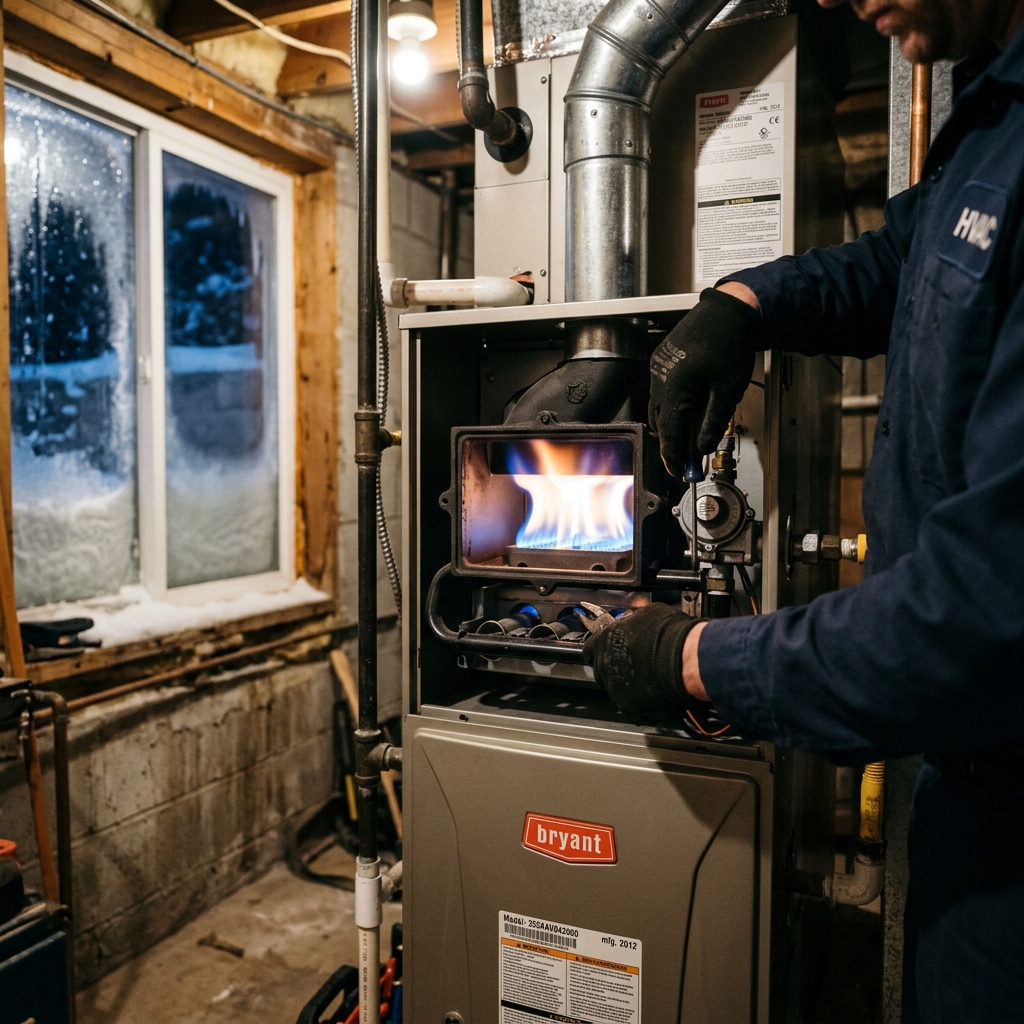
The most common winter emergency call we receive involves a furnace that won’t ignite. Modern furnaces use either a hot surface igniter or an intermittent pilot system, and both fail more frequently in cold weather.
Hot surface igniters are made of silicon carbide or silicon nitride—materials that become brittle with age. When a 15°F night hits and the furnace cycles on and off repeatedly, the thermal shock can crack an aging igniter. The fix takes about 30 minutes and costs far less than a full breakdown.
In homes across the South Side and Bessemer neighborhoods, we frequently see ignition issues related to gas pressure fluctuations during peak demand periods. When everyone in the area fires up their furnace simultaneously, line pressure can drop just enough to cause intermittent ignition failure.
Cracked Heat Exchangers
This is the furnace problem that keeps HVAC professionals up at night. A cracked heat exchanger can leak carbon monoxide into your home’s air supply. Colorado’s extreme temperature swings—sometimes 50+ degrees in a single day—cause metal fatigue in heat exchangers faster than steady cold climates.
Warning signs include a yellow or flickering burner flame instead of steady blue, soot buildup near the furnace, and frequent headaches or flu-like symptoms in your household. If you suspect a cracked heat exchanger, shut off the furnace immediately and call for furnace repair.
Blower Motor Burnout
When temperatures drop below zero, your furnace runs continuously. That nonstop operation stresses the blower motor bearings and windings. Older single-speed motors are especially vulnerable because they operate at full output regardless of heating demand.
Symptoms include a humming sound without airflow, reduced air volume from vents, or the furnace shutting down on the high-limit switch. A failing blower motor in a Belmont or Aberdeen home during January isn’t just uncomfortable—it risks frozen pipes and serious water damage.
Thermostat Malfunctions
Cold drafts near wall-mounted thermostats can cause inaccurate readings, leading to either constant running or failure to trigger the furnace. Homes with thermostats on exterior walls experience this more often. Relocating the thermostat to an interior wall or upgrading to a smart thermostat with remote sensors solves the problem permanently.
Dirty or Clogged Filters
It sounds basic, but a clogged air filter is behind roughly 40% of furnace performance complaints we see each winter. When the filter restricts airflow, the heat exchanger overheats and trips the high-limit safety switch. The furnace cycles on and off rapidly, never reaching your set temperature.
During winter in Pueblo, check your filter monthly. Homes with pets, homes near construction, and homes in dusty areas like Colorado City and Avondale may need monthly replacements.
Ductwork Leaks and Cold Spots
Your furnace might work perfectly, but if your ducts are leaking heated air into the attic or crawlspace, you’ll still have cold rooms. We estimate 25–40% of heated air is lost through duct leaks in older Pueblo homes. Duct sealing and insulation fixes this problem and typically pays for itself within two heating seasons.
Preventing Winter Furnace Problems
- Schedule a professional furnace tune-up every fall before the first cold snap
- Replace your air filter before winter and check it monthly
- Test your carbon monoxide detectors and replace batteries
- Clear the area around your furnace of any stored items
- Know the location of your gas shutoff valve
Frequently Asked Questions
That’s usually dust burning off the heat exchanger after months of inactivity. It should dissipate within an hour. If the smell persists or smells electrical rather than dusty, turn off the furnace and call a technician immediately.
A properly sized furnace should maintain your set temperature even in sub-zero weather. If it can’t keep up when temperatures drop below 10°F, the unit may be undersized, have a failing component, or your home may have significant insulation or duct problems.
No. Closing vents increases static pressure in the duct system, forcing the blower motor to work harder and potentially causing duct leaks. It also creates pressure imbalances that pull cold outside air through gaps in the building envelope.
For Pueblo’s climate, we recommend a minimum 96% AFUE high-efficiency furnace. The price difference over a standard 80% unit is typically recovered in 3–5 years through lower gas bills, especially with our cold winters.
Replace when the furnace is over 18 years old, has a cracked heat exchanger, requires repairs exceeding 50% of a new unit’s cost, or runs on a recalled model. A new furnace installation gives you manufacturer warranty protection and significantly better efficiency.