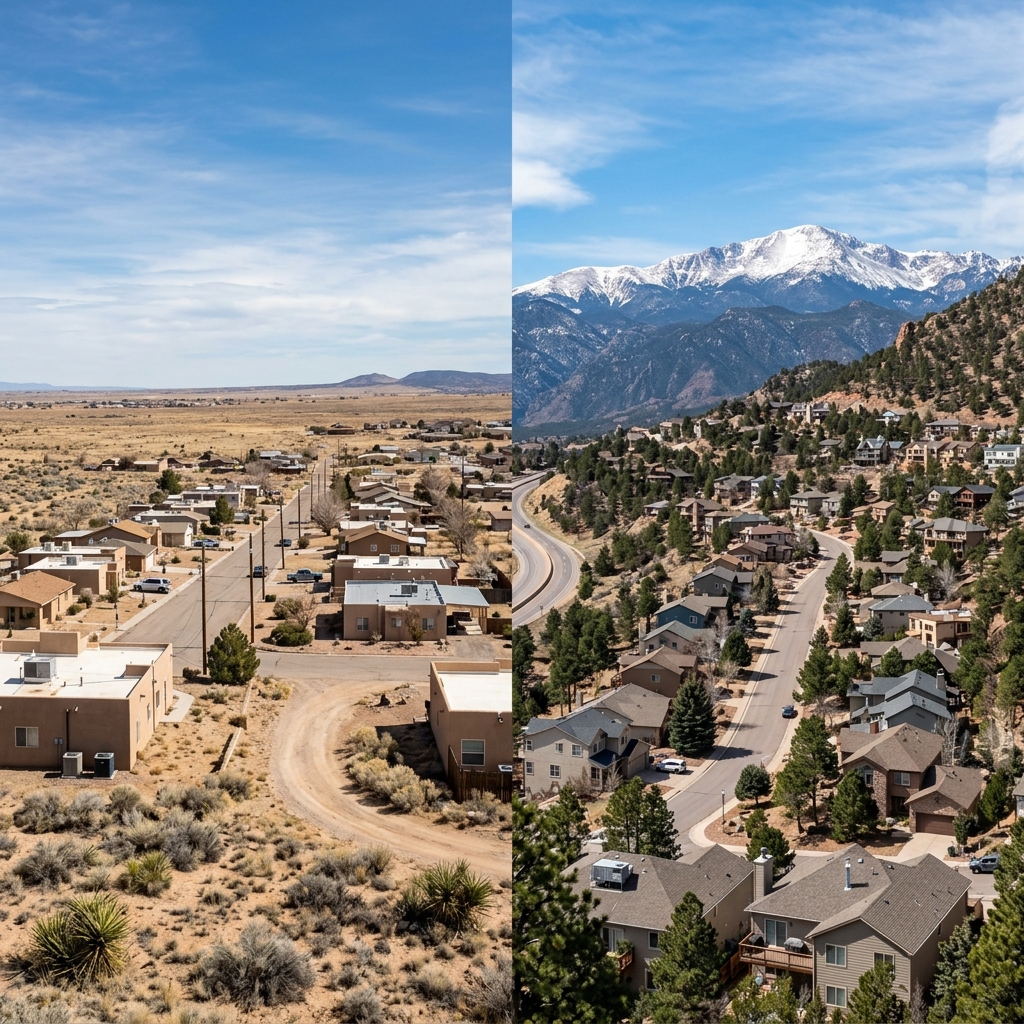
Pueblo and Colorado Springs sit just 40 miles apart on I-25, but their HVAC requirements are surprisingly different. A 1,300-foot elevation difference, distinct microclimates, and different housing stocks mean the ideal heating and cooling setup for a Pueblo home won’t necessarily work for a Colorado Springs property—and vice versa.
Elevation and Temperature Differences
Pueblo sits at 4,692 feet. Colorado Springs at 6,035 feet. That 1,343-foot gap translates into measurable climate differences:
- Summer highs: Pueblo averages 5–8°F hotter than the Springs. Our 95–105°F heat waves are often 88–95°F up the highway.
- Winter lows: Colorado Springs experiences colder overnight lows by 3–5°F on average, plus significantly more snowfall.
- Air density: Air at 6,035 feet is about 5% thinner than at 4,692 feet, further reducing HVAC heat transfer efficiency at the higher elevation.
These differences directly impact system sizing. An AC unit perfectly sized for a Pueblo home would be slightly undersized for the same floor plan in Colorado Springs due to the lower air density affecting condenser performance.
Cooling Demands
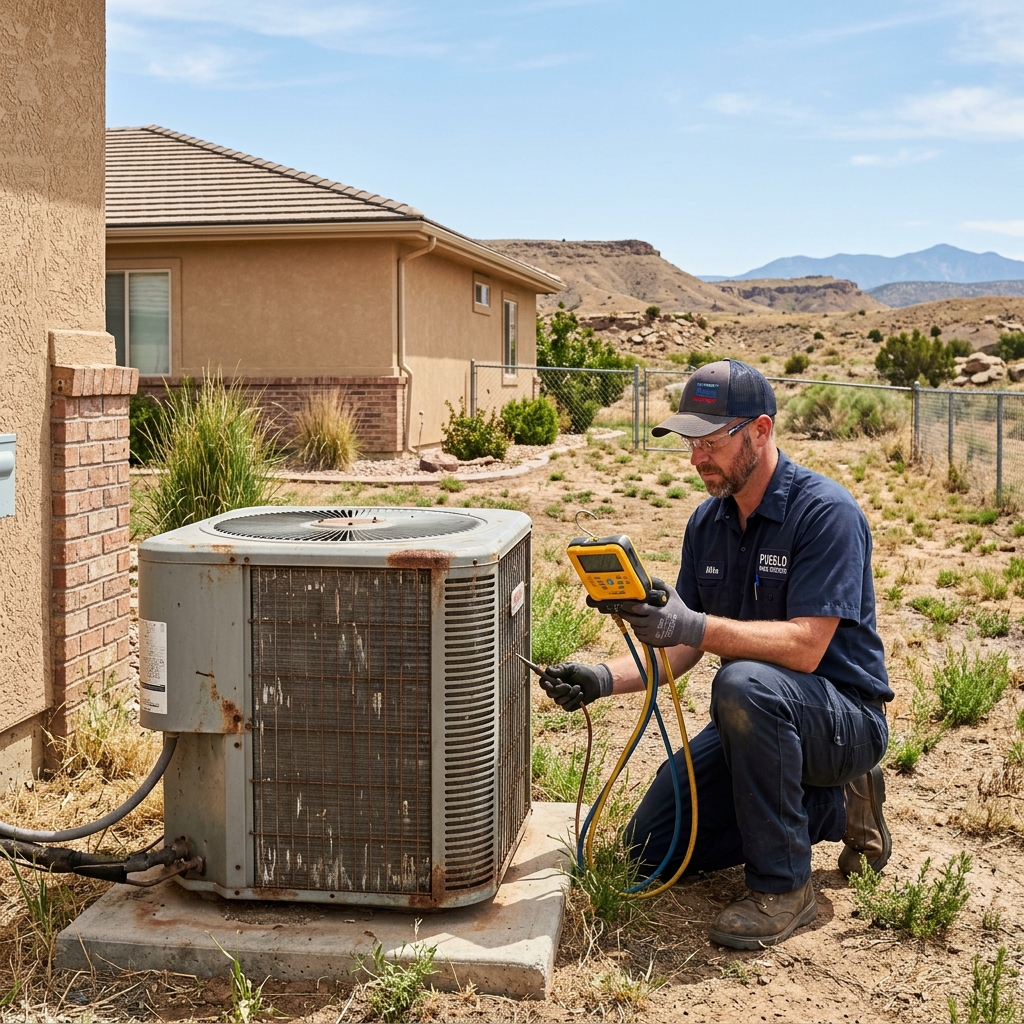
Pueblo’s hotter, longer summers mean air conditioning is essential—not optional. Homes here need robust cooling systems rated for sustained high-temperature operation. Many Colorado Springs homes historically relied on evaporative (swamp) coolers because the higher elevation brought cooler summers. That’s changing as summers warm, but the cooling infrastructure gap between the two cities persists.
Pueblo homeowners also benefit more from high-SEER systems because the longer cooling season provides more months of energy savings to offset the higher equipment cost. A 16 SEER upgrade in Pueblo pays for itself faster than the same upgrade in Colorado Springs.
Heating Requirements
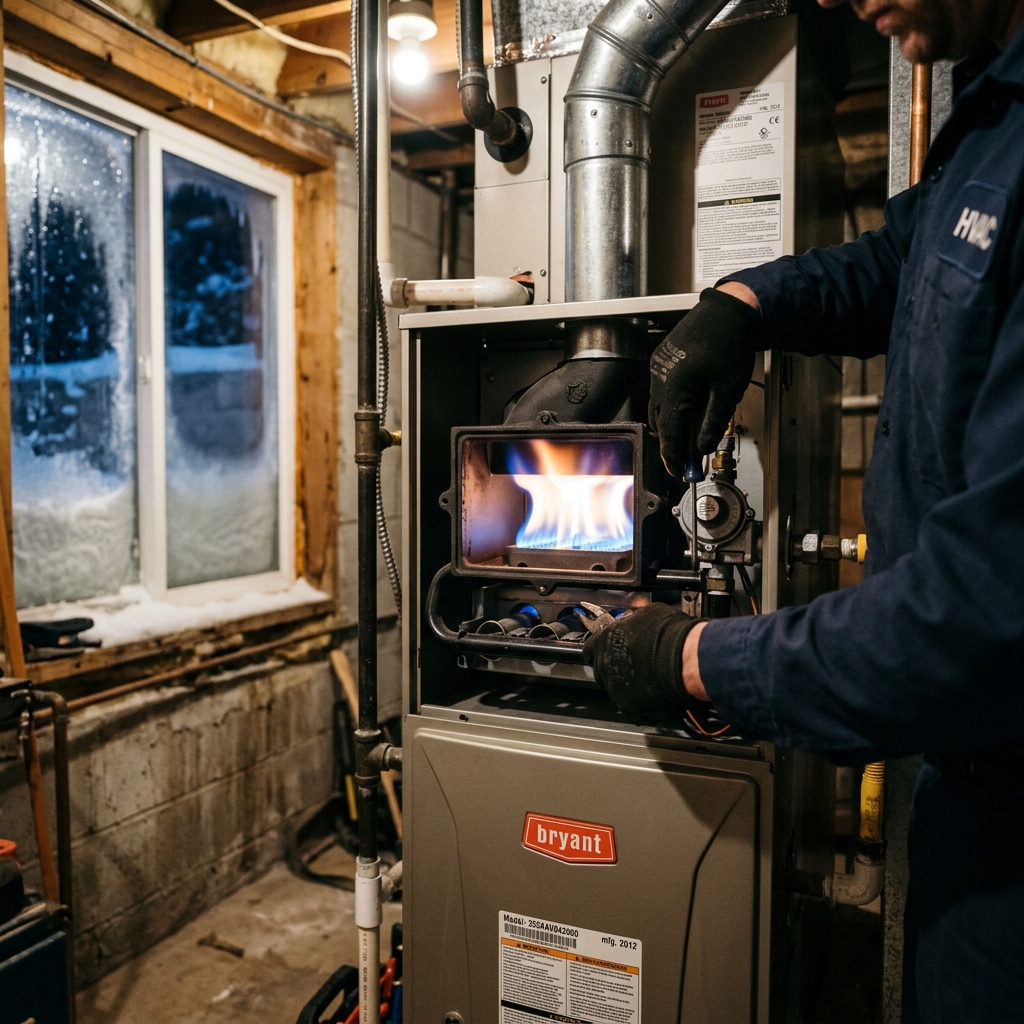
Both cities need reliable heating, but Colorado Springs generally requires larger heating capacity due to colder temperatures and greater snowfall. Pueblo homes spend less on heating fuel annually, making our city more attractive for heat pump installations where the moderate winter temperatures keep efficiency high.
Colorado Springs also faces more extreme wind events from downslope mountain winds, which increase infiltration rates in older homes and drive up heating costs. Pueblo gets wind too, but the valley geography provides more shelter than the exposed Front Range corridor.
Housing Stock Differences
Pueblo’s housing stock skews older, with many homes built in the 1950s through 1970s. These homes often have:
- Original gravity-fed ductwork designed for furnaces only
- Minimal attic and wall insulation by modern standards
- Single-pane windows (though many have been upgraded)
- Crawlspace construction common on the South Side and Bessemer neighborhoods
Colorado Springs experienced rapid growth in the 1990s and 2000s, so a larger percentage of homes have modern construction with proper insulation, engineered duct systems, and energy-efficient windows. These newer homes are inherently easier and cheaper to condition.
What This Means for Homeowners
If you’re moving between the two cities or own property in both areas, don’t assume what worked in one city will work in the other. Get a professional HVAC assessment specific to each property’s location, construction, and microclimate. The investment in proper sizing and system selection saves thousands over the equipment’s lifetime in both comfort and operating costs.
Frequently Asked Questions
Some companies serve both areas, but you’ll get better response times and local expertise from a contractor based in your city. A Pueblo-based company understands our specific climate challenges better than one primarily serving the Springs.
Pueblo tends to have higher cooling costs and lower heating costs, while Colorado Springs sees the opposite. Total annual HVAC energy costs are roughly comparable for similar-sized homes, but the seasonal distribution differs significantly.
For the same house, Pueblo typically needs a slightly larger cooling capacity due to higher peak temperatures. However, Colorado Springs may need a larger heating capacity. The key is proper load calculations for each specific location and home.
Evaporative coolers work well in Pueblo’s dry climate for most of the summer. However, during monsoon season (July–August) when humidity rises, their effectiveness drops. Many Pueblo homeowners use evaporative cooling as a primary system with a small AC backup for humid days.
No. Major HVAC manufacturers honor warranties regardless of installation altitude. However, proper installation with altitude-appropriate gas valve adjustments is required to maintain warranty coverage. Always use a licensed contractor familiar with high-altitude installations.