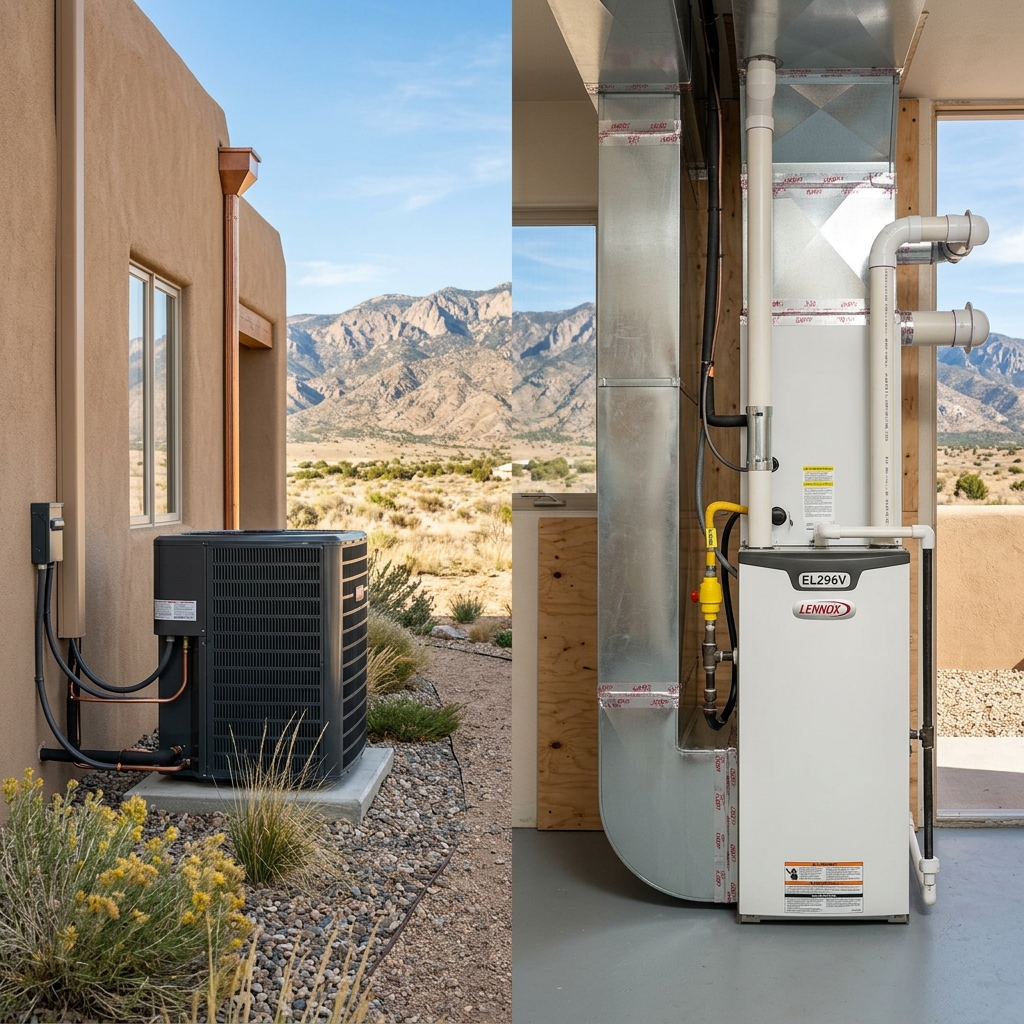
For most Pueblo homeowners, a dual-fuel system combining a heat pump with a gas furnace backup delivers the best year-round performance. Heat pumps handle heating efficiently down to about 30°F and provide excellent cooling in summer. Below 30°F, the gas furnace takes over for the coldest winter days. This combination typically saves 25–35% on annual heating and cooling costs compared to a furnace-only setup.
Understanding the Basics
A gas furnace burns natural gas to produce heat. Simple, reliable, and effective even in extreme cold. A heat pump works differently—it moves heat from outdoor air into your home using refrigerant, essentially running like an air conditioner in reverse. Modern cold-climate heat pumps can extract usable heat from air as cold as -15°F, though efficiency drops as temperatures decline.
The critical factor for Pueblo? Our winters are moderate compared to Denver or the mountain towns. Average January lows hover around 15–20°F, with only occasional dips below zero. That means a heat pump operates efficiently for the majority of our heating season.
How Each Performs in Pueblo’s Climate
Heat Pump Advantages Here
- Dual functionality — One unit handles both heating and cooling, eliminating the need for a separate AC. For homeowners replacing both systems, this simplifies installation and maintenance.
- Lower operating costs — During mild periods (above 35°F), heat pumps deliver 2.5–3 units of heat for every unit of electricity consumed. Gas furnaces max out at about 0.96 units of heat per unit of gas burned.
- Great summer cooling — Heat pumps provide excellent air conditioning with high SEER2 ratings, perfect for our 90–100°F summers.
- No combustion — No carbon monoxide risk, no gas line requirements, and no exhaust venting needed.
Gas Furnace Advantages Here
- Sub-zero reliability — When Pueblo gets a deep freeze (we see 0°F or below several times per winter), a gas furnace delivers full heating capacity regardless of outdoor temperature.
- Lower equipment cost — A quality gas furnace installed costs $3,500–$6,000 less than a comparable heat pump system.
- Faster heat delivery — Gas furnaces produce air at 120–140°F, warming rooms quickly. Heat pump supply air is typically 90–105°F, which feels cooler from the vents even though it’s still heating effectively.
- Existing infrastructure — Most Pueblo homes already have gas lines and ductwork sized for furnace operation.
The Dual-Fuel Sweet Spot
A dual-fuel system uses the heat pump as the primary heating source and automatically switches to the gas furnace when temperatures drop below a set point (usually 30–35°F). You get the efficiency of the heat pump for 80% of the heating season and the raw power of the furnace for the coldest stretches.
For homes in Penrose and Florence, which sit at slightly higher elevations and experience colder nights, setting the switchover point a few degrees higher ensures maximum comfort. Colorado Springs homeowners at 6,000+ feet may lean more heavily toward furnace operation during winter months.
Cost Comparison for a Pueblo Home
Based on a typical 2,000-square-foot Pueblo home with average insulation:
- Gas furnace + AC: $8,000–$13,000 installed, estimated annual heating/cooling cost $1,800–$2,400
- Heat pump only: $8,500–$14,000 installed, estimated annual cost $1,400–$1,900
- Dual-fuel (heat pump + furnace): $12,000–$18,000 installed, estimated annual cost $1,200–$1,700
The dual-fuel system costs more upfront but delivers the lowest annual operating costs and the most consistent comfort across Pueblo’s variable climate.
Frequently Asked Questions
Yes. Pueblo’s 4,692-foot elevation has minimal impact on heat pump performance. The thinner air slightly reduces efficiency, but modern inverter-driven heat pumps compensate automatically. The bigger concern is extreme cold, which is why we recommend dual-fuel setups.
In many cases, yes. If your furnace is in good condition and your ductwork is adequate, adding a heat pump outdoor unit to create a dual-fuel system is often more affordable than replacing everything. A technician needs to verify compatibility first.
Yes. Federal tax credits of up to $2,000 are available for qualifying heat pump installations under the Inflation Reduction Act. Some utility companies and the state of Colorado offer additional incentives. These rebates can significantly offset the higher upfront cost.
Modern inverter heat pumps operate at 55–65 decibels outdoors, roughly equivalent to a normal conversation. They’re noticeably quieter than older AC units. Indoor noise levels are comparable to a gas furnace blower.
With proper maintenance, a quality heat pump lasts 15–20 years in Pueblo. In a dual-fuel setup, the heat pump sees less extreme-cold stress, which can extend its lifespan compared to heat-pump-only installations in colder climates.