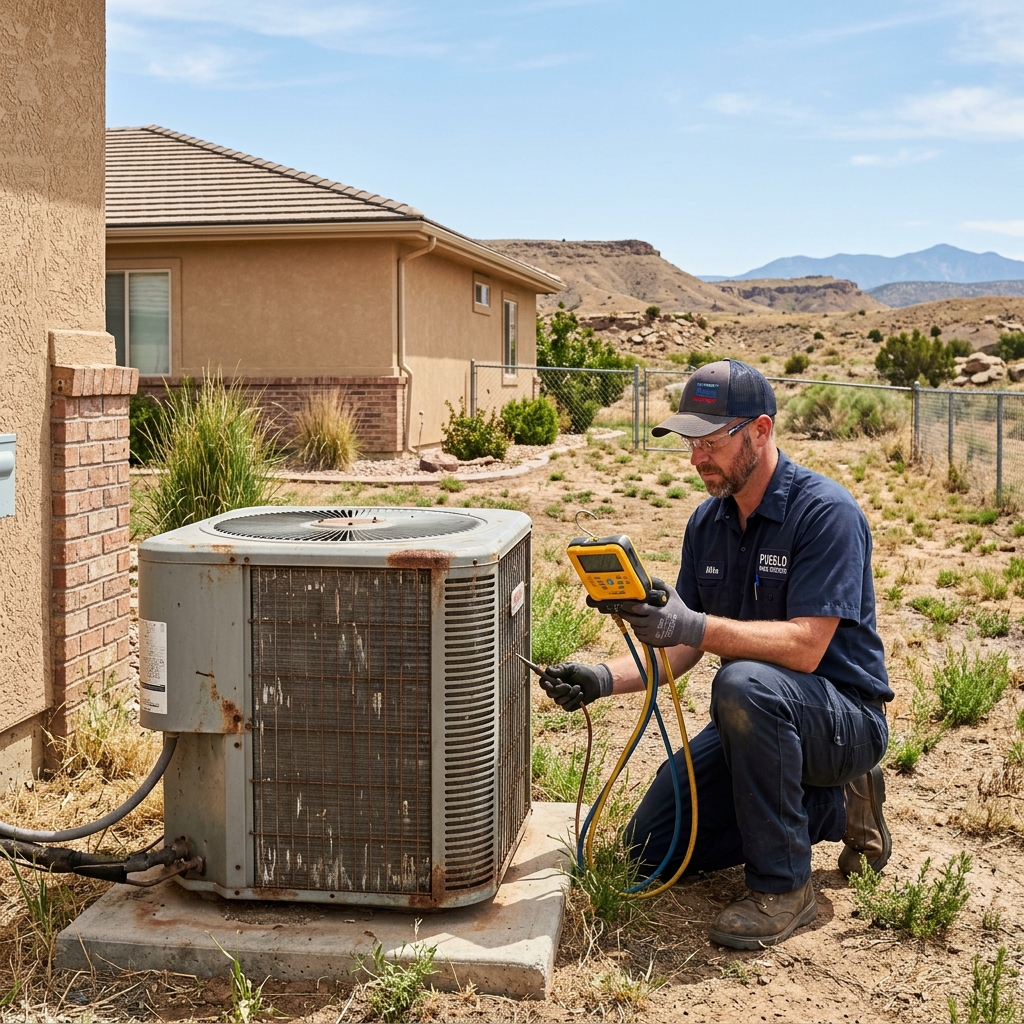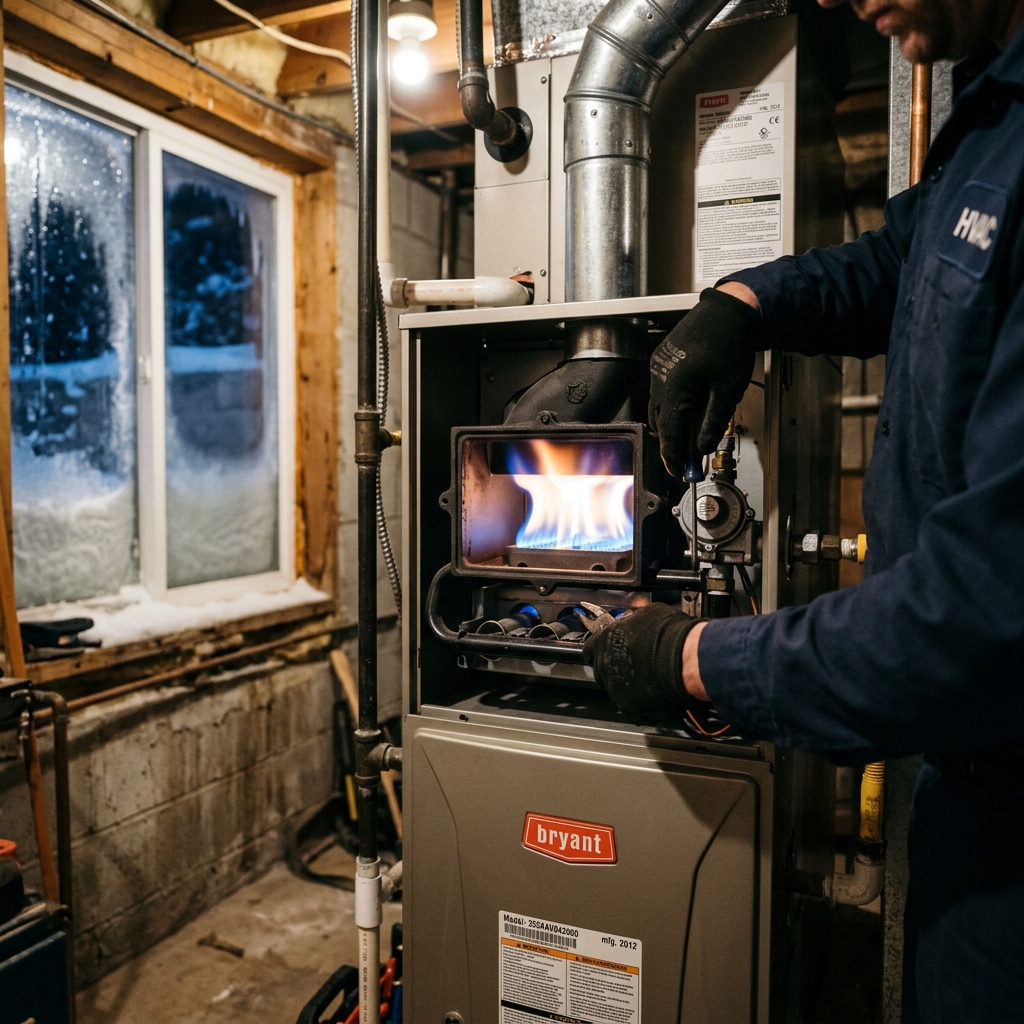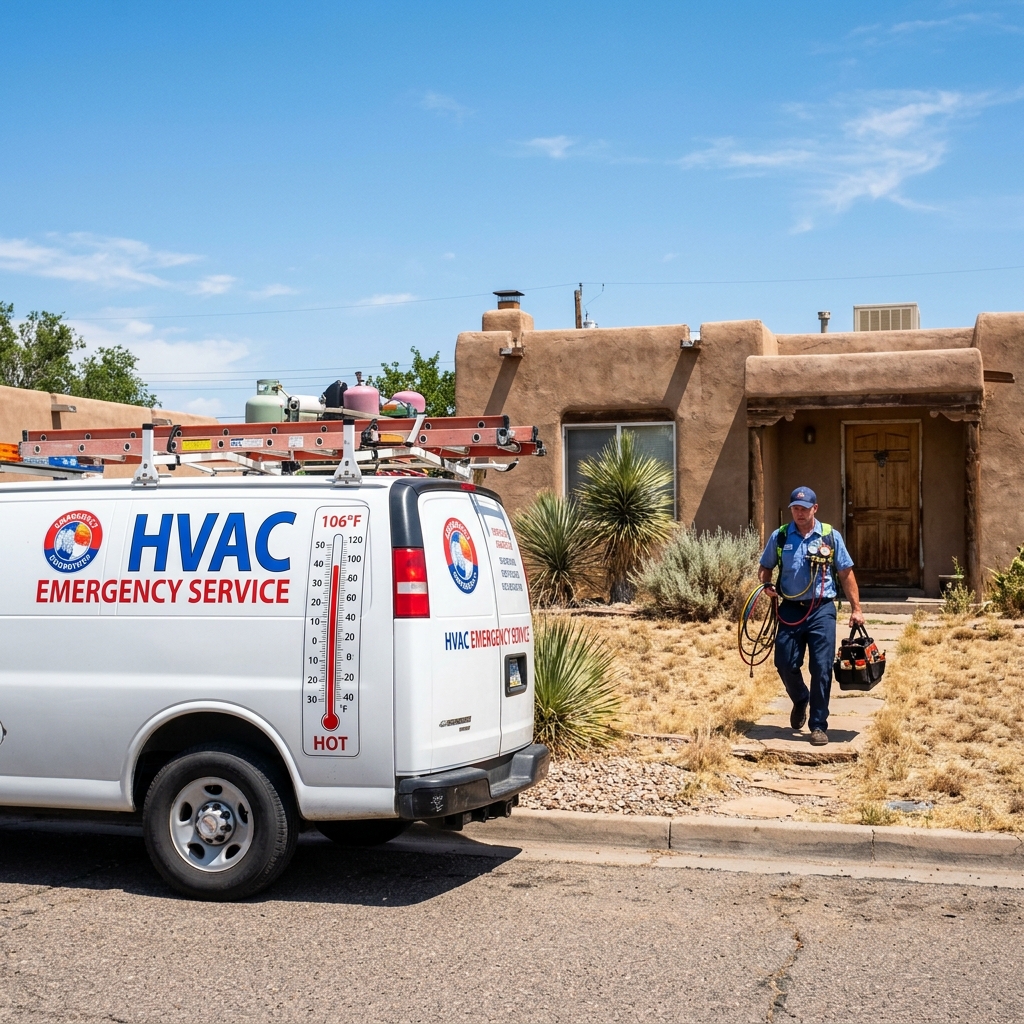
When your AC dies during a Pueblo heat wave, you have about 2–3 hours before indoor temperatures become dangerous for elderly residents, young children, and pets. Knowing what to do in those first minutes—and who to call—can make the difference between a minor inconvenience and a medical emergency. Here’s the exact protocol our technicians recommend.
The First 30 Minutes: Immediate Steps
Before calling anyone, take these actions to slow the heat buildup inside your home:
- Close all blinds and curtains on south and west-facing windows. Solar heat gain through glass accounts for 30% of indoor temperature rise.
- Turn off heat-generating appliances — ovens, dryers, dishwashers, and even multiple computers. Each one adds measurable heat to your indoor environment.
- Open windows on the shaded side of your home if the outdoor temperature hasn’t peaked yet. Early morning and late evening, outdoor air may be cooler than your rising indoor temperature.
- Turn on every ceiling and box fan you own. Moving air doesn’t lower temperature, but it accelerates sweat evaporation, making you feel 4–6°F cooler.
- Wet towels and cold water — apply cold, wet towels to your neck and wrists. These are pulse points where cooling is most effective.
Quick Troubleshooting Before Calling
About 15% of emergency calls we respond to involve problems homeowners can fix themselves. Check these before dialing:
Thermostat Issues
Verify the thermostat is set to COOL and AUTO. Check batteries if it has them. Try setting the temperature 5 degrees lower than current room temperature. Sometimes a power glitch resets the programming.
Tripped Breaker
Check your electrical panel. The AC typically has a dedicated 240V breaker. If it’s tripped, reset it once. If it trips again immediately, leave it off—there’s an electrical fault that needs professional diagnosis.
Outdoor Disconnect
Some homes have a disconnect switch near the outdoor condenser. Make sure it hasn’t been accidentally shut off by a landscaper or child.
Frozen Evaporator Coil
If you see ice on the indoor unit or refrigerant lines, turn the system to FAN ONLY for two hours to let it thaw. Running the AC with a frozen coil damages the compressor. Once thawed, restart in COOL mode. If it freezes again, the system has a refrigerant leak or airflow problem that requires professional AC repair.
When It’s a Real Emergency
Call for emergency HVAC service when:
- Indoor temperatures exceed 90°F with vulnerable people in the home
- You smell burning or see smoke from any HVAC component
- The system makes loud banging, grinding, or screeching noises
- Electrical sparks are visible at the outdoor unit or electrical panel
- You’ve tried basic troubleshooting and the system still won’t run
During major heat waves, most Pueblo HVAC companies experience call volumes 3–4 times normal levels. Homeowners in Pueblo West, the East Side, and Vineland neighborhoods often face the longest wait times because technicians travel from central Pueblo. Having a relationship with a local HVAC company in Pueblo before an emergency gives you priority service status.
Preventing the Emergency in the First Place
Most summer AC failures are predictable. They happen because small problems went unaddressed:
- Capacitors weaken over time and fail under heavy load—a $150 replacement during a spring tune-up prevents a $300+ emergency call
- Low refrigerant from a slow leak causes the compressor to overheat—detectable during routine maintenance
- Dirty condenser coils force the system to work harder—a quick cleaning adds years of life
An annual AC maintenance visit catches these issues when they’re cheap and convenient to fix, not during a 105°F emergency.
Frequently Asked Questions
During normal conditions, most reputable Pueblo HVAC companies offer 60–90 minute response times. During heat waves, expect 2–6 hours depending on demand. Companies with larger technician teams generally respond faster.
Most companies charge an after-hours or emergency premium of $75–$150 on top of normal diagnostic and repair rates. Some maintenance plan members receive emergency calls at standard rates. Always ask about pricing before authorizing work.
Yes. A portable AC in a single room with the door closed can maintain livable temperatures while waiting for repairs. Focus on cooling the room where you’ll sleep. Close all other rooms to concentrate the cooling effect.
If indoor temperatures exceed 95°F and you have elderly family members, young children, pets, or anyone with health conditions, relocate to an air-conditioned space. Pueblo’s public libraries and the Pueblo Mall provide free cooling during heat emergencies.
Generally no. Homeowner’s insurance covers HVAC damage from covered events like storms or fires, not mechanical breakdowns. A home warranty plan may cover repairs, though they often have limits and preferred provider requirements.