Commercial HVAC systems in Pueblo account for 40–60% of a business’s total energy costs. For a 5,000-square-foot retail space or office, that translates to $800–$2,000 per month during peak summer and winter seasons. Smart HVAC management isn’t just about comfort—it’s one of the most impactful ways to protect your bottom line.
Preventive Maintenance Is Your Best Investment
A commercial HVAC system that receives quarterly professional maintenance runs 15–25% more efficiently than one that’s only serviced when it breaks. For a Pueblo business spending $18,000 annually on heating and cooling, that efficiency gap represents $2,700–$4,500 in avoidable costs every year.
What does effective commercial maintenance include?
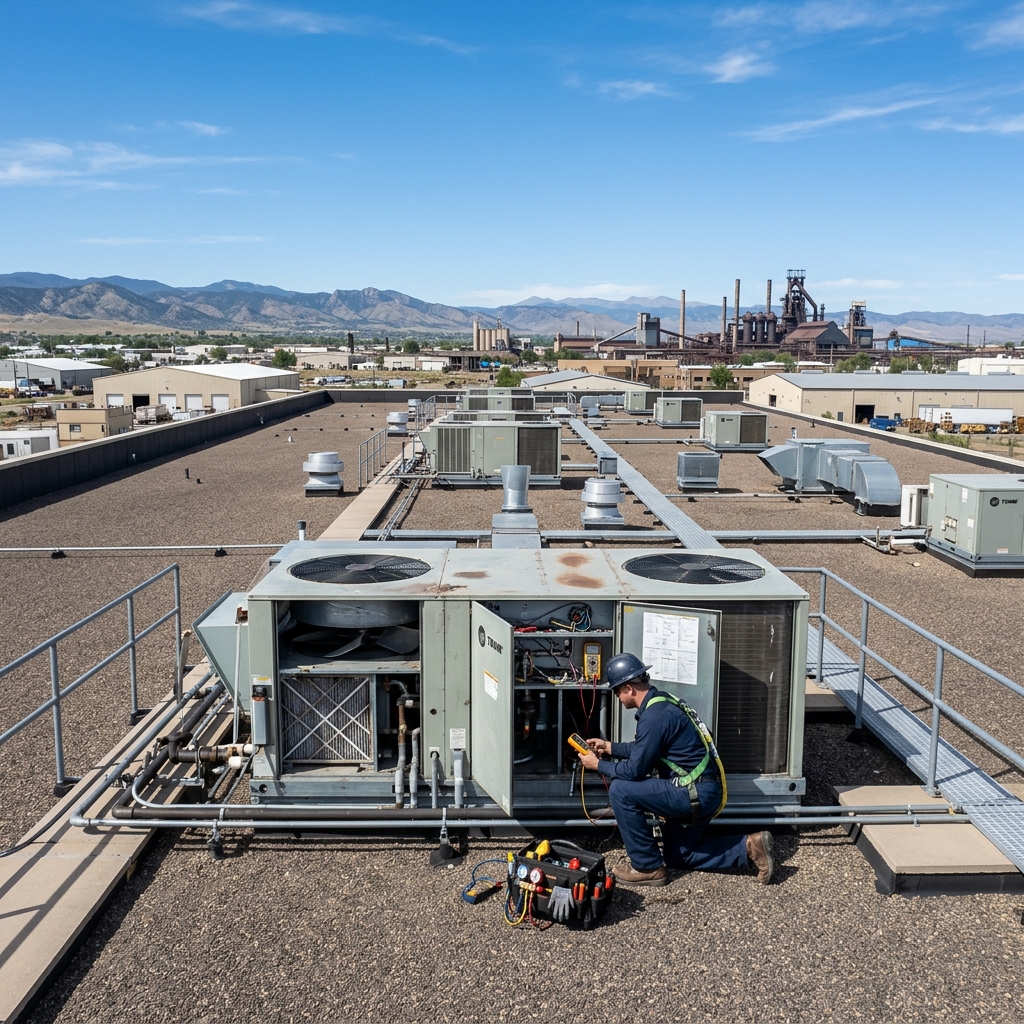
- Quarterly rooftop unit inspections — Belt tension, refrigerant charge, electrical connections, condenser coil cleaning, and drain line clearing
- Monthly filter changes — Commercial environments with high foot traffic and Pueblo’s dusty conditions demand more frequent filter replacement than residential settings
- Annual ductwork inspection — Commercial duct cleaning and sealing prevents energy waste and maintains indoor air quality standards
- Bi-annual economizer testing — Many commercial units have economizers that bring in free cooling during mild weather. When these malfunction, they either waste energy or introduce unfiltered air
Right-Sizing for Pueblo’s Commercial Environments
Commercial HVAC sizing in Pueblo requires accounting for factors that don’t apply to residential work:
Occupancy Loads
A restaurant on Union Avenue during a busy Friday night has radically different cooling needs than the same space at 2 PM on a Tuesday. Systems need to handle peak occupancy without short-cycling during slow periods. Variable refrigerant flow (VRF) systems excel at this type of dynamic load matching.
Equipment Heat Loads
Commercial kitchens, server rooms, and manufacturing equipment generate substantial internal heat. A small server closet can require a dedicated 2-ton cooling unit. Ignoring these loads during design leads to chronic overheating and equipment failures.
Building Envelope Considerations
Many commercial buildings in Downtown Pueblo and along Northern Avenue have flat roofs with minimal insulation, large glass storefronts, and older construction. These factors dramatically increase both heating and cooling loads compared to modern commercial construction.
Energy Management Strategies
Programmable Building Controls
Installing a building automation system (BAS) or commercial-grade programmable thermostat can cut HVAC costs 20–30%. These systems automatically reduce conditioning during unoccupied hours, ramp up before opening, and adjust based on actual conditions rather than fixed schedules.
Demand-Controlled Ventilation
CO2 sensors in occupied spaces adjust ventilation rates based on actual occupancy rather than fixed minimum rates. In spaces with variable occupancy like conference rooms, retail stores, and churches across Pueblo West and Pueblo proper, this saves significant energy without compromising air quality.
When to Replace Commercial Equipment
Commercial rooftop units (RTUs) typically last 15–20 years with proper maintenance. Consider replacement when:
- Repair costs exceed 40% of new equipment cost
- The unit uses R-22 refrigerant (phased out, expensive to recharge)
- Energy costs have increased 20%+ despite consistent usage patterns
- The unit can no longer maintain specified temperatures during peak conditions
Frequently Asked Questions
Quarterly at minimum. High-demand environments like restaurants, medical offices, and manufacturing facilities benefit from monthly inspections during peak heating and cooling seasons. Pueblo’s dusty conditions accelerate filter clogging and coil fouling compared to less arid locations.
Most commercial HVAC upgrades in Pueblo achieve full ROI within 3–5 years through energy savings. High-efficiency RTUs with economizers and variable-speed drives show the fastest payback, especially for businesses operating 60+ hours per week.
Strongly recommended. Maintenance contracts typically cost less than reactive service calls, include priority scheduling, and reduce the risk of costly emergency breakdowns during business hours. Many contracts also include discounted parts and labor rates.
Yes. Zoning is one of the most effective ways to improve comfort and reduce costs. Areas with different usage patterns, heat loads, or occupancy schedules should have independent temperature control. VRF systems are particularly well-suited for multi-zone commercial applications.
Pueblo follows Colorado’s commercial building energy code, which aligns with the International Energy Conservation Code (IECC). Commercial HVAC installations require mechanical permits and inspections. Specific requirements vary by occupancy type and building size.